Downhill skiing
Slopes for every level, from the Olympic runs to the children's training fields.
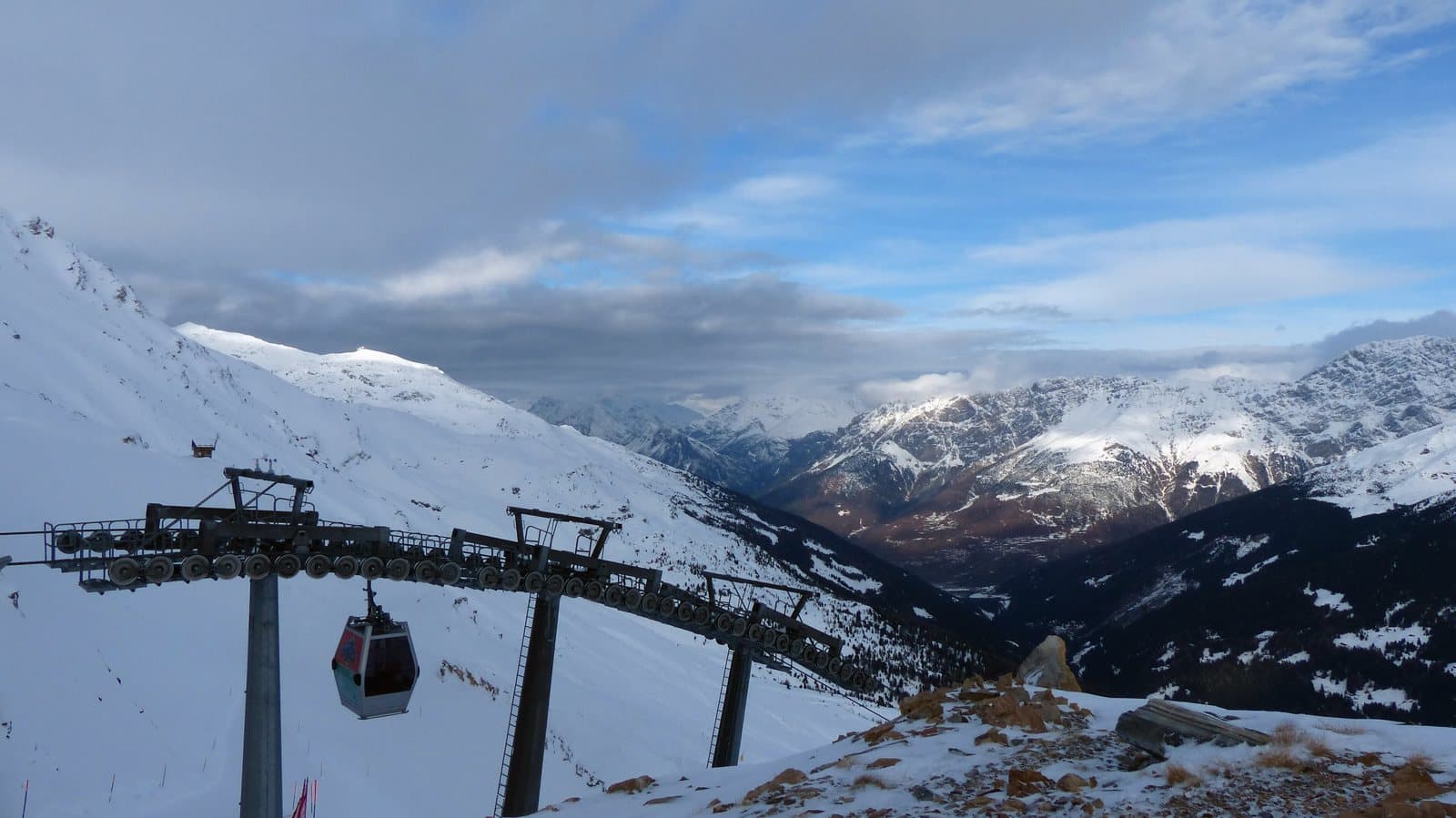
In Valtellina people have always skied, and it shows. All it takes is a gondola ride early in the morning, with the snow still untouched and the sun just beginning to brush the ridges, to understand why these valleys are called the homeland of the white sports. Here, alpine skiing is not just one holiday among many: it is a tradition passed from father to son, from teacher to pupil, and it has given the Alps some of the most celebrated pistes in the whole Alpine arc. There is Bormio's Pista Stelvio, which drops from over three thousand metres to the valley floor and has hosted World Cup races and the Olympics; there are the great open spaces of Livigno, with its 115 kilometres of pistes; there are the luminous basins of Santa Caterina, beneath the glaciers of the Ortles-Cevedale, and the amphitheatres of Valmalenco facing the Bernina.
But alpine skiing in Valtellina is also something more: it is the nursery slope where a child makes first turns with an instructor who speaks their language; it is the wide, gentle piste where a parent rediscovers the joy of gliding down without hurry; it is Aprica's floodlit evening run, with the village glittering beneath your skis. Every ski area has its own character: some are big and spectacular, others cosy and familial, all with the same gift of making visitors feel at home. Here are the seven ski areas where you can enjoy it, with what makes each different from the others: choose the one that resembles your way of skiing, and let yourself be carried away.
Where to do it
The ski areas that offer this sport, with what you need to know.
Aprica
Aprica
Four sectors and an evening piste
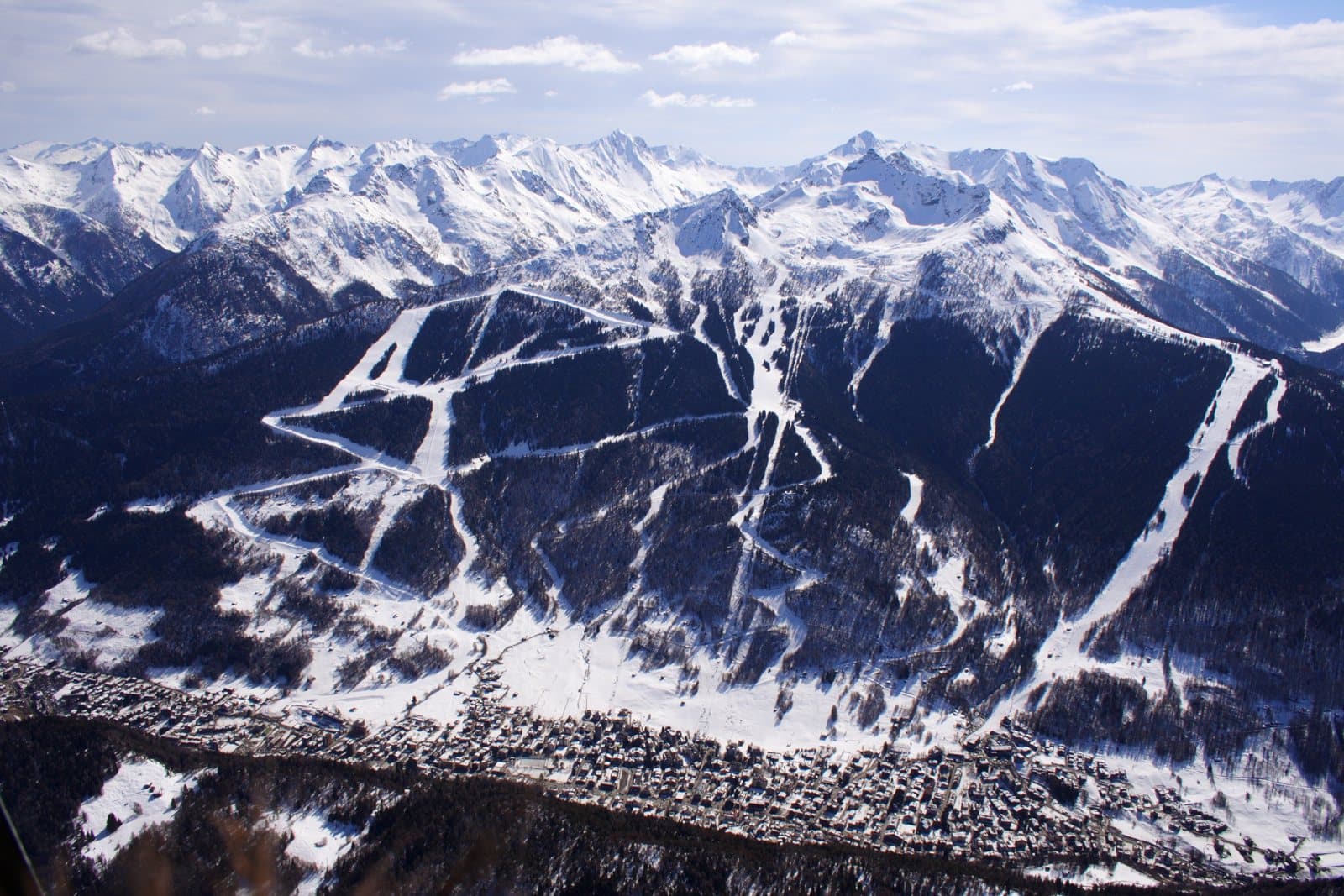
Aprica offers about 50 kilometres of pistes distributed over four sectors, each with its own character: Campetti, Magnolta, Palabione and Baradello. From the pass you ski down among firs and clearings, with views over Valtellina and towards the mountains of the Adamello, in a landscape that has the gentleness of the Lombard Alps and the light of the great sunny days. The lifts, almost twenty among chairlifts, gondolas and surface lifts, link the sectors and let you organise the day as you prefer.
Campetti is the sporting heart of the village: it has the ski schools, the areas for beginners and the Initial Park, for snowboarding and freestyle, with jumps and games for those who want to have fun. Magnolta has wide, easy pistes, ideal for families and for those seeking a relaxed run; Palabione is the highest sector, with longer, more panoramic trails climbing to about 2,300 metres and, from the highest point, giving a view over the Orobie Alps and Alta Valtellina. Baradello, finally, links Aprica with Corteno Golgi, with pistes descending through the woods towards Valcamonica.
The star of the evening is the Superpanoramica del Baradello, a floodlit piste that at night lights up above the village like a ribbon of light. You ski with the moon overhead, with the village lights glittering lower down and the sound of skis on cold snow, in an atmosphere that joins a little thrill and a little magic. It is one of the experiences Aprica's guests love most, and one more reason to stay until evening.
After the piste comes village life: a coffee, a snack, an aperitif, then dinner in one of the restaurants in the centre, with traditional dishes. Aprica is convenient, accessible and affectionate, and a day on skis easily turns into a pleasant evening. The next day you begin again, with a different sector and another light. And if you want a change, Bormio and Livigno are reachable in a day, but it is easy to forget them: in Aprica winter, taken calmly, is more than enough.
Bormio
Bormio
From the Pista Stelvio to 3,000 metres
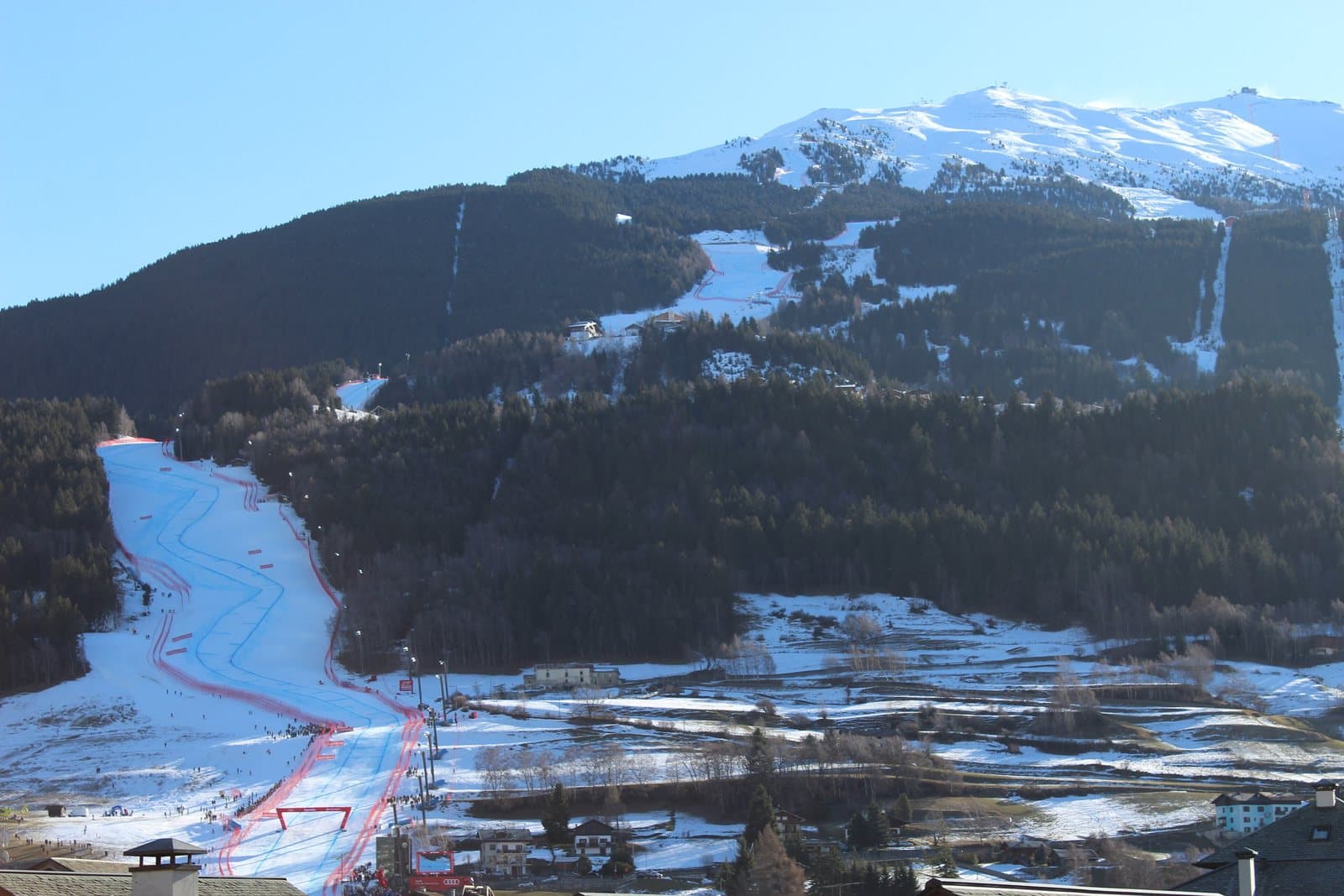
Few places in the world have a piste with a history like the Stelvio's. It drops from over 3,000 metres to 1,225, from high altitude to the first houses of the village, a vertical drop that makes your legs tremble even just looking at it from above. It has been the stage of World Cup races and of the 2026 Winter Olympics, and anyone who skis it, even at a tourist's pace, feels the weight of a legend. But Bormio is not just that piste: it is a complete ski area, with a run for every skier.
You begin from the village, riding the gondola to Bormio 2000, just under 2,000 metres, where a broad nursery slope with an extremely gentle gradient and a view of the peaks makes you forget the effort of the first days. From here you ski towards Ciuk, at 1,636 metres, or go higher still, with the cable car to Bormio 3000, on Cima Bianca, at 3,012 metres. It is a viewpoint worth the ride on its own: the air is sharp, the sky a deep blue, and you see a sea of peaks, from the Ortles to the Bernina.
The pistes, about fifty kilometres served by fifteen lifts, offer everything: blue slopes for descending at ease, fast reds to warm your legs, blacks that command respect. For those who want to have fun in a different way there is a snowpark and slopes designed for play, suited to the young and to those who love surprises. Those who want more can use the lift pass shared with Santa Caterina and Cima Piazzi, a circuit of about 110 kilometres that lets you change scenery every day without changing hotel.
At the end of the day you go down into town, among old palazzi and alleys that smell of wood and cooking, and treat yourself to the baths: Bormio's hot waters, springing from the mountain, are a very ancient tradition, and after a day of descents they are the perfect reward. Then dinner, pizzoccheri, a glass of Valtellina wine and a stroll through the lit-up centre. Bormio is like this: a champions' piste and a village to live in, where it is hard to decide whether you came to ski or to stay.
Livigno
Livigno
115 kilometres of freedom
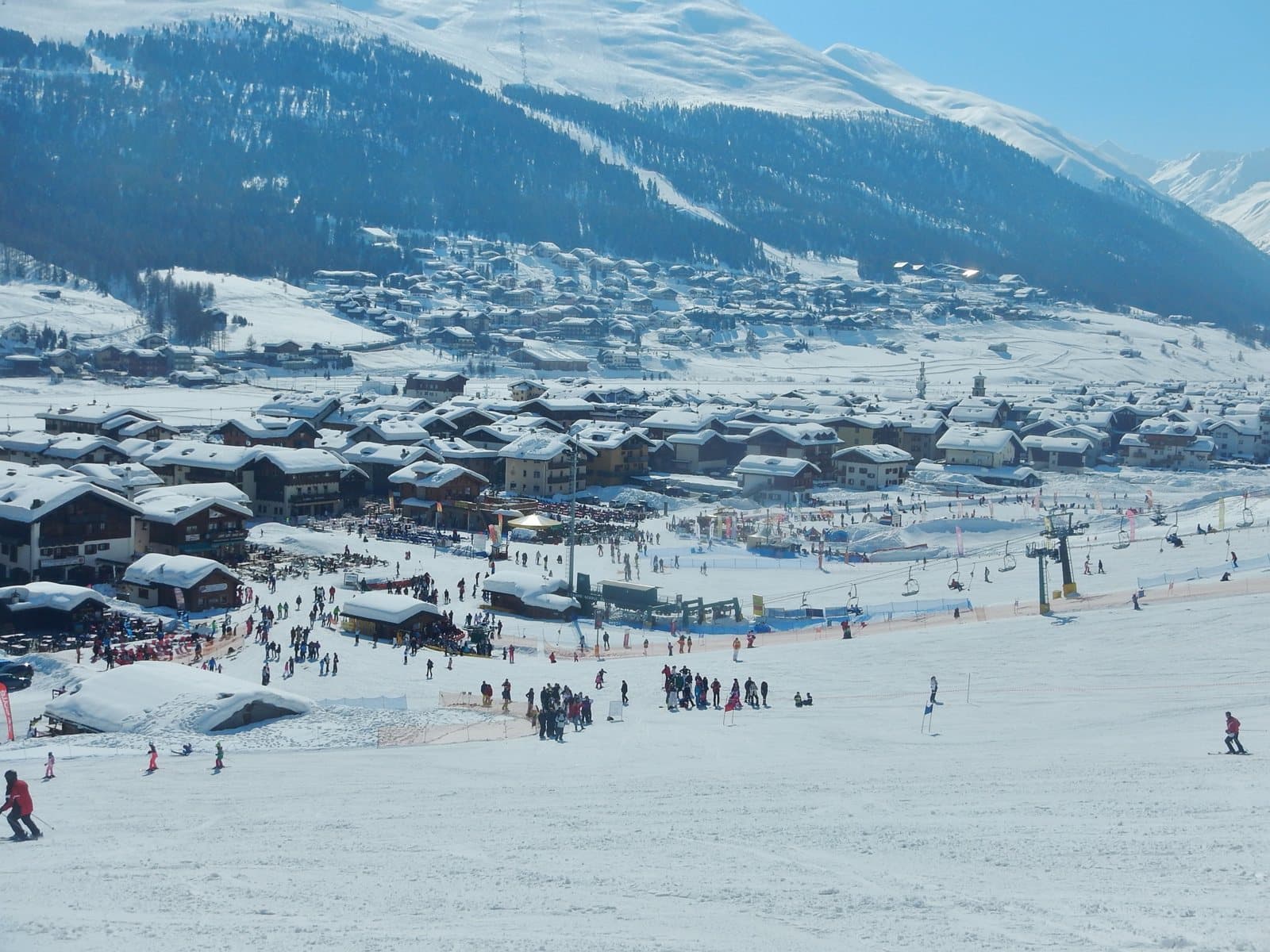
Livigno is a world of its own, and you realise it already while driving up the road to the village, at 1,800 metres, where snow is guaranteed until well into spring. Here the pistes are not a detail: they are the landscape. About 115 kilometres of runs, over seventy trails and 32 lifts, gondolas, chairlifts and surface lifts, spread over two sides that give the resort its double character: the Carosello 3000 to the west, in the sun, with its great open slopes, and the Mottolino to the east, with its freestyle spirit.
The Carosello 3000 is an invitation to speed and contemplation. The pistes stretch beneath the peaks, wide and luminous, with long, panoramic runs that suit both expert skiers and those who want a day without hurry. At midday you lunch at one of the mountain huts, facing a spread of white mountains; in the afternoon you set off again, with the sun still warming the slopes and the snow staying firm. The Mottolino, instead, is the area of jumps, curving banks and surprises: it has the snowparks, the technical runs and a young, engaging skiing culture.
The two areas are joined by a free shuttle, the skilink, and a single lift pass gives access to both, with the freedom to change side according to the weather, the snow or your mood. There are nursery slopes for beginners, also for children from the age of three, and more than a hundred and fifty instructors teaching in many languages; the Lupigno Fun Park, linked to the Centrale school, is designed for the little ones. In the village's shops you can rent all the equipment, with the convenience of ski storage close to the slopes.
And then there is the village. Livigno is a duty-free resort, with a long main street full of shop windows, and after a day on skis it is pleasant to stroll among the shops, have a coffee, dine in a restaurant serving pizzoccheri and sciatt. In the evening the village comes alive, but without excess: people meet to chat, to replay the runs, to plan the next day. And the next day, inevitably, the snow is still there, and so is the wish to be back on the piste.
Valdidentro
Valdidentro – Cima Piazzi e San Colombano
The ski area of the locals
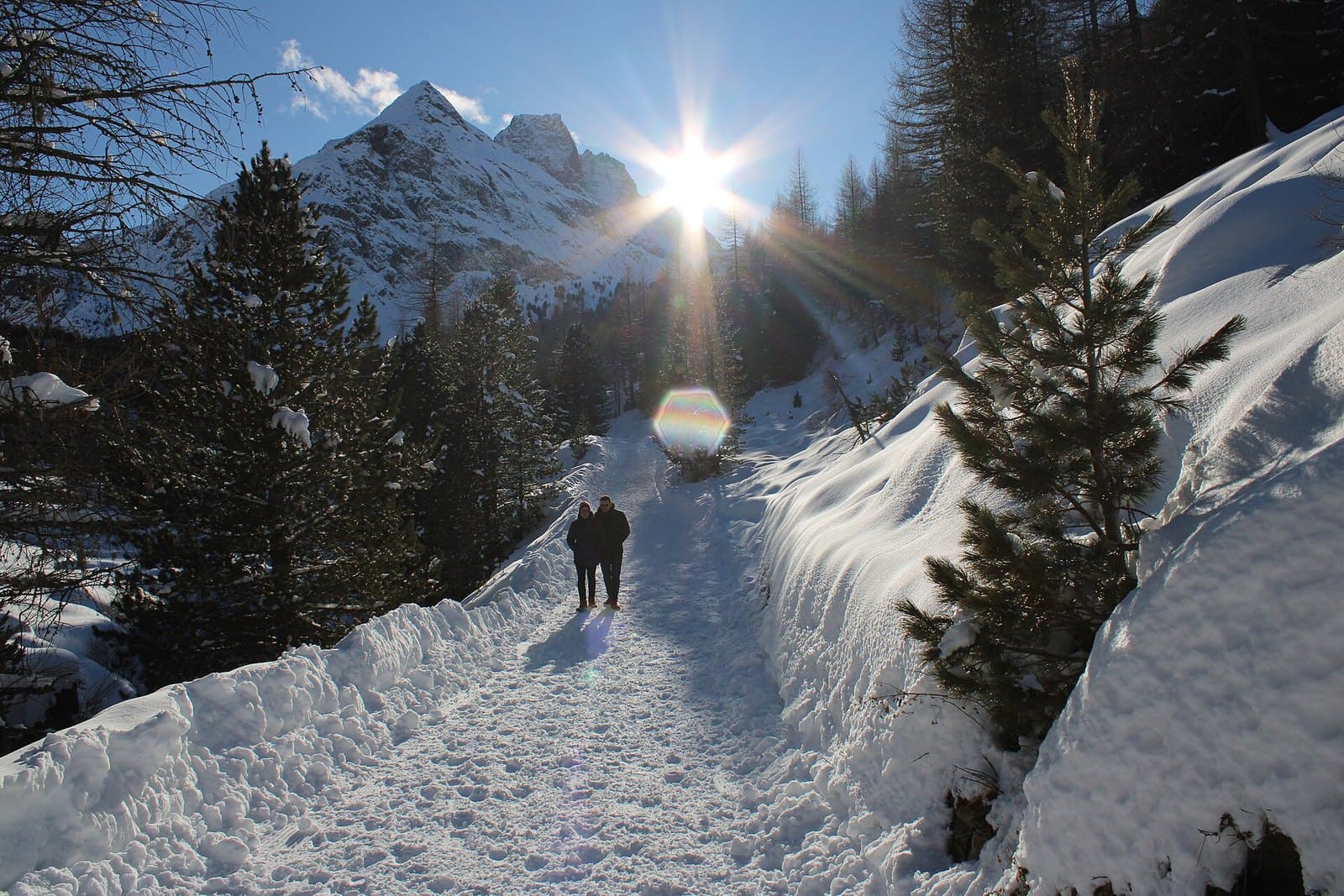
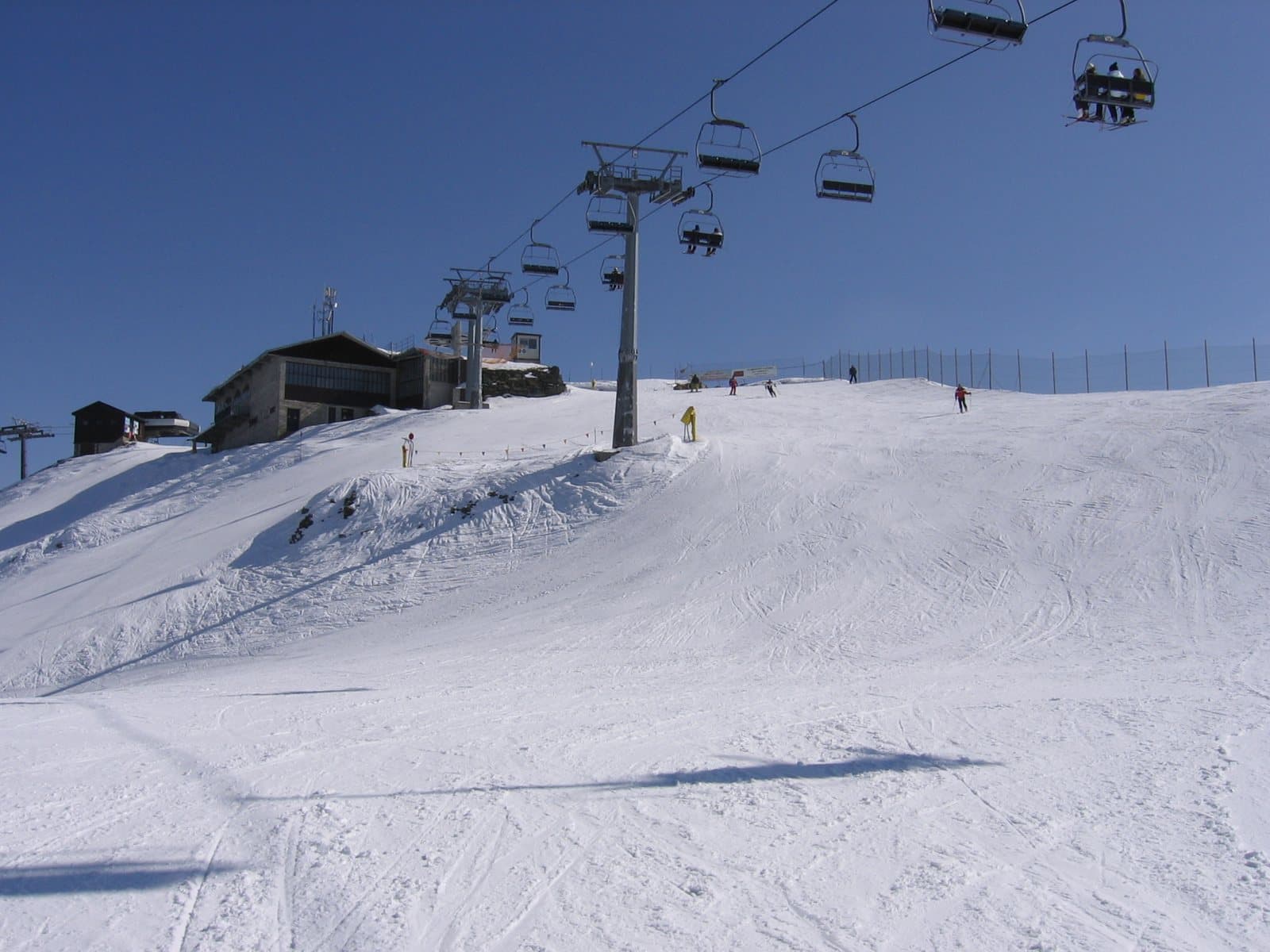
Cima Piazzi–San Colombano is the corner of pistes where the people of Valtellina ski, and that already says a lot. From Isolaccia and Oga you climb from 1,345 to 2,550 metres, the highest point near Dosso le Pone, over about twenty kilometres of pistes winding among fir woods and open slopes, with the air of a family ski area and the soul of a true mountain. Here there is no race for the fastest piste and no queue at the lift: there are skiers who go up in the morning, come down calmly, stop to look at the landscape and to chat.
The two sides, Isolaccia and Oga, have their own character. At Isolaccia the ski area rises straight from the village, with wide, sunny pistes crossing woods and clearings; at Oga, higher up, you ski in a more intimate setting, with the Forte di Oga, a historic mountain outpost, recalling the story of this border valley. The pistes are varied: blue slopes for beginners, red and black runs for those who want to test themselves, all immersed in generous, uncrowded nature.
The ski area is an ideal choice for families. The nursery slope and the Baby Park, with their world of animals and games, welcome the little ones; programmes such as Orsacchiotti World, for first turns, and the Family Bob, for having fun all together, make the day on the snow a celebration. The Scuola Sci Valdidentro offers lessons for adults and children, family packages and special weekends for young people from four to fourteen.
And there is one more advantage: the lift pass is shared with Bormio, Santa Caterina and Livigno, in the Alta Valtellina Ski Tour, for those who want to change scenery one day and come back here the next. In the evening you return to Isolaccia or Oga, where you dine on traditional dishes, chat with the locals and go to bed early. Valdidentro is this: skiing without hurry, in a valley that knows how to welcome you like a friend.
Valfurva
Valfurva – Santa Caterina
Real snow, beneath the glaciers
Santa Caterina is the right place for those who want to ski at high altitude, in a grand setting, without giving up quiet. The village lies at over 1,700 metres, and from here the lifts climb in a short time towards altitudes approaching 2,700 metres, inside a wide basin facing the Ortles-Cevedale group. The altitude guarantees stable snow for much of the season, and snowmaking helps in the moments when nature is late.
The pistes, about thirty-five kilometres, spread over wide, luminous slopes, with runs that have the breadth of the high mountains: long, panoramic, with a big sky above and ridges that seem within a stone's throw. There is the Pista Deborah Compagnoni, named after the Olympic champion who has her roots in the village, and there are the runs from the Sobretta ridge, at almost 2,800 metres, which give the feeling of skiing straight into the Stelvio National Park. For beginners there are the nursery slopes near the village, for the more experienced the steeper stretches at altitude.
A day in Santa Caterina flows naturally. You go up early, when the snow is fresh from grooming and the sun lights the first walls; you ski without stopping too much, stop to look at the landscape and warm up with a break at a mountain hut, perhaps with a plate of pizzoccheri or a polenta with cheese. Then you set off again, do another run, and let the light decide when it is time to go back.
Those who want a longer day can use the lift pass shared with Bormio and Cima Piazzi, the BormioPass, and widen their horizons to about 110 kilometres of pistes; those who prefer to stay here will find more than enough to fill a week. In the evening you return to the village, where the chimneys are lit and Valtellina cooking perfumes the whole street. Santa Caterina is like this: a big mountain, lived in a simple way, with snow that tastes of real winter.
Chiesa in Valmalenco
Valmalenco – Alpe Palù
A balcony over the Bernina
The day begins in the village, Chiesa in Valmalenco, at a thousand metres, with skis over your shoulder and the Snow Eagle gondola waiting. A few minutes later you are already at Alpe Palù, and the landscape changes at once: the valley opens, the sky grows larger, and in front of you appears the Bernina, its crown of ice, the Disgrazia standing out on the left. It is one of those moments when you understand why you chose the mountains.
The pistes, more than fifty kilometres between roughly 1,500 and 2,300 metres, spread across the slope like a map that invites exploration. There is the long, panoramic run that starts from Cima Motta, at over 2,300 metres, and descends wide and sunny towards the alp; there are blue runs for those who want a gentle pace, red slopes for those who want a bit of speed, black stretches for those who love a challenge. The nursery slope, right on the alp, welcomes beginners, while the snowpark draws the youngest with its jumps and curving banks.
What makes Valmalenco special is the way everything holds together: the pistes are wide, often in the sun, and you ski without the hurry of the big resorts. At midday you stop at a mountain hut, perhaps one of the many reached straight from the slopes, for a steaming polenta or a plate of pizzoccheri. You look at the landscape, warm your hands, and then set off for another run, with the light changing every hour and giving the snow different tones.
When the shadows lengthen and the sun begins to sink behind the ridges, you take the final run down towards the village, with tired legs and a light heart. The day ends in Chiesa, among shop windows, cafés and the scent of chimneys. And the next day, instead of a new piste, you choose the same one: because the beauty of Valmalenco is that every run, repeated, finds a way of seeming different.
Slopes, lifts and opening dates change every season: always check the ski areas' official websites before setting out.