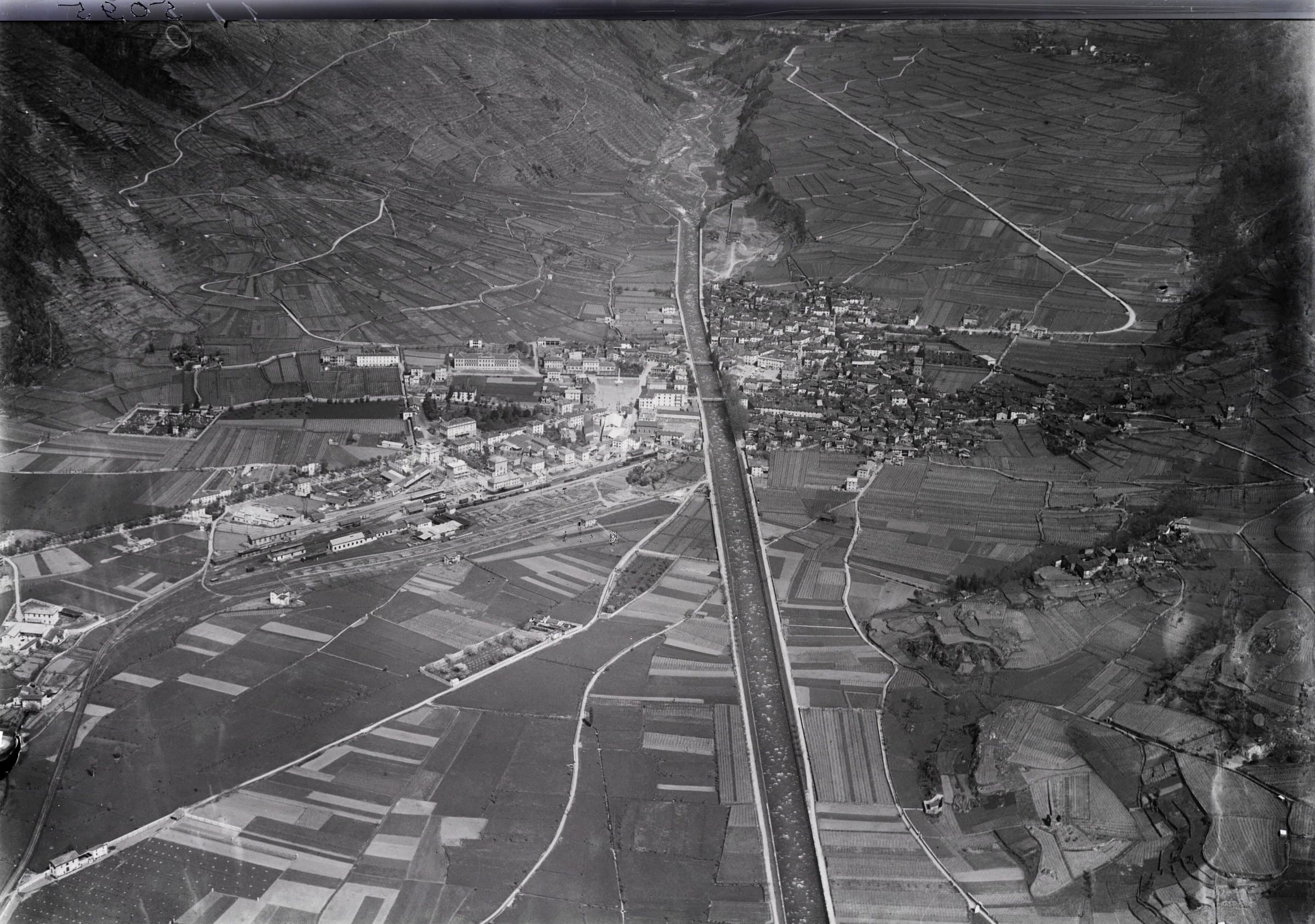
History
Valtellina, a valley of passes and stories
From the carved rocks of the Bronze Age to the trains climbing the Bernina: the adventurous tale of a borderland that has always been a bridge between worlds.
12 min read
Some valleys are crossed in a hurry, eyes fixed on the road. Others ask to be listened to, because every bend hides a story. Valtellina belongs to the second kind. Long and narrow, stretched out at the foot of the Rhaetian Alps and the Orobie, furrowed by the Adda that flows down from the glaciers of the Stelvio towards Lake Como, it has been a corridor for two thousand years: of merchants and armies, of pilgrims and exiles, of smugglers and engineers. Whoever held its keys held the doors between Italy and the German-speaking world, between Milan and the Engadine, between Venice and the Tyrol. That is why its history, looked at up close, reads like an adventure novel. And the best part is that you can still walk right into it.
A valley made to be crossed
One look at a map is enough to understand. To the north, the great peaks of the Bernina and the Stelvio; to the south, the Orobie; in between, that long green furrow the Valtellinese simply call the Valley. From Colico, on Lake Como, it climbs for more than a hundred kilometres up to Bormio, and from each of its branches a pass opens: the Stelvio towards the Val Venosta, the Bernina towards the Engadine, the Gavia and the Mortirolo towards the Valcamonica, the Aprica towards Brescia and Venice. It is a mountain road that smells of trade: Valtellina wine took the road to the Grisons, salt travelled along the same routes, and alongside the goods walked ideas, weapons and faiths.
It was this position, even more than the mountains, that decided the fate of the valley. No one has ever been able to ignore it.
The first inhabitants: signs on the rock, and wine
Long before there was a name for this land, someone left messages here. At Grosio, on a great rock smoothed by glaciers, the first inhabitants of the Bronze Age engraved human figures, animals, symbols and spirals with stone points. It is the Rupe Magna, the most important archaeological monument in the valley: a book of stone written by peoples of whom we know little, but whose hand we can still recognise.
Then came peoples of Celtic, Ligurian and Rhaetian origin, described by the ancient authors as mountain folk used to the cold and the high passes. The Romans met them and subdued them; as a reminder, the Trophy of the Alps, the monument Augustus had erected to celebrate the conquest of the Alpine peoples, lists among the defeated tribes the Vennonetes, probably the ancient inhabitants of this valley. With Rome came roads, settlements, trade. And the vine: on the south-facing slopes, where the sun beats down all day, a tradition was born that survives today in the terraces held up by dry-stone walls, one of the most impressive agricultural landscapes of the Alps.
The thermal baths of Bormio, mentioned already by Pliny the Elder, tell another side of the same story. To write the "history" of Valtellina also means this: realising that the hot water gushing out at 1,200 metres and the wine ripening on sun-drenched terraces are two threads of the same weave.
Lombards, Franks and bishops
After the fall of the Roman Empire the valley entered a time of comings and goings and carve-ups. In 568 the Lombards arrived, and some groups of warrior-horsemen settled on the most fertile plateaus, leaving their name to more than one place. Then the Franks, then the prince-bishops. In religious terms Valtellina was for centuries under the diocese of Como, and it was from Como that the valley was governed, between the bishop and the Commune, until the mid-fourteenth century. In these centuries the castles arose whose outlines can still be guessed on the hilltops: watchtowers, border fortresses, symbols of a power that kept watch from above.
Around 1335 Azzone Visconti, lord of Milan, conquered Como and seized its territory: Valtellina thus became part of the Duchy of Milan, and the Visconti first, the Sforza afterwards, governed it for more than a century and a half. It was a precious valley, and it was defended. At Tirano, Ludovico il Moro had a circle of walls built, entrusting the design to Giovanni Antonio Amadeo, the great architect of the Certosa di Pavia; at Bormio the valley kept intact its autonomies, its thirty-two towers and its privileges.
1512: the Grisons arrive
The sixteenth century opened with a political earthquake. After the Italian Wars, with the fall of the Sforza and the brief French interlude, the Three Leagues of the Grisons, an alliance of Alpine communities born in the fifteenth century in neighbouring eastern Switzerland, came down into Valtellina and took it. On 27 June 1512, with the oath of Teglio, the valley was officially annexed to the Grisons. A rule began that would last until 1797, almost three centuries.
The Grisons governed with a mix of rigour and respect for custom. They divided the valley into three terzieri, entrusting it to a captain resident in Sondrio; they left Bormio and Chiavenna a special status; in 1531 they approved the Statutes of Valtellina, which recognised local laws. In 1526, to prevent revolts, they had the castles demolished. And, to make people pay taxes in proportion to their wealth, they introduced a general estimo, one of the first examples of a land register drawn up with criteria similar to modern ones.
Faith and sword: the seventeenth century
But there was a fracture that no law could heal. The Three Leagues had embraced the Protestant Reformation; Valtellina, by a vast majority, had remained Catholic. For a century the two faiths lived side by side, with growing tension, while Italian refugees fleeing the Inquisition found shelter in the mountains and the pope, the bishops of Como, Saint Charles Borromeo and the King of Spain followed every move with a watchful eye. The Spanish, who ruled the Duchy of Milan, wanted control of the valley: through it ran the corridor linking their Italian possessions to those of the Habsburgs of Austria, in the midst of the Thirty Years' War.
In 1618 the archpriest of Sondrio, Nicolò Rusca, died under torture at the hands of a Grisons tribunal. In the night between 18 and 19 July 1620, at Tirano, began what memory calls the Sacro Macello, the Holy Slaughter: a Catholic revolt led by Giacomo Robustelli, orchestrated with Spanish backing, which in a few days killed hundreds of Protestant Valtellinese, between four and six hundred people by estimate. Many survivors fled to the Grisons and Switzerland, creating communities of exiles who would keep the memory of that night alive for generations.
It was a painful page, and the history of Valtellina cannot pretend it never lived it. The Sacro Macello was also the beginning of the Valtellina War: for twenty years the valley was fought over by Spain, France, Venice, Savoy, the Grisons and the Papacy. The Duke of Rohan, a French general, set up his headquarters at Tirano in 1635-1636. In the end, in 1639, with the Capitulation of Milan, the valley returned to the Grisons on one precise condition: only the Catholic faith would be practised there.
When history sits down at the table
Some pages of Valtellina's history are found not in archives but on plates. Between the end of the sixteenth century and the beginning of the seventeenth, more than anywhere else in the Italian Alps, the cultivation of buckwheat spread here, which still gives its dark colour to pizzoccheri and polenta taragna. Popular tradition, which finds no confirmation in documents but has the charm of well-told stories, ties it to Grosio: it would have been Circassian, Balkan or Ottoman women, bought in Venice by Grosio emigrants and then married, who brought with them the seed and the recipe. What is certain is that Grosio preserves a women's costume of lively colours, with gold jewellery and earrings that until the early twentieth century came directly from the Serenissima, a memory of ties with Venice that crossed the Alps.
At the same table, the wine. The terraced vineyards of the Rhaetian side, dominated by villages like Baruffini and Roncaiola above Tirano, yield grapes that are left to dry on racks to produce Sforzato: a powerful wine that seems to tell in the glass the toil of those who built, one dry-stone wall after another, an entire landscape.
From the Grisons to Napoleon, from the Austrians to Italy
The eighteenth century was a quiet one, of vineyards, markets and small family palaces. The quiet ended with the Revolution. In 1797 Napoleon Bonaparte separated Valtellina from the Grisons and joined it to the Cisalpine Republic; the Valtellinese then followed the fortunes of Lombardy, from the Italian Republic to the Napoleonic Kingdom. When the emperor fell, the Swiss tried to take the valley back, and two Valtellinese delegates, Count Diego Guicciardi and Gerolamo Stampa, were sent to the Congress of Vienna to defend the cause. In the end Valtellina remained with the Lombardy-Venetia Kingdom, that is, with Austria, which wanted to hold the Alpine passes, beginning with the Stelvio.
It was Austria itself that gave the valley one of its boldest works. Between 1820 and 1825, under the direction of the engineer Carlo Donegani, the Stelvio road was built: sixty-three months of work, up to two thousand five hundred workers, to bring a carriage road up above 2,700 metres, opening a direct link between Milan and the Tyrol. Even today, climbing its hairpins, you retrace that feat.
The nineteenth century: roads, emigration and the Risorgimento
In 1859, with the second war of independence, Valtellina was annexed to the Kingdom of Sardinia and two years later became part of the Kingdom of Italy. From Tirano came Luigi Torelli, who in 1848 had taken part in the Five Days of Milan and would become a senator and Minister of Agriculture. The new Italy brought schools, roads and great hope; it also brought the poverty of many peasant families, and from the second half of the nineteenth century many Valtellinese took the road of emigration, to Switzerland, France, the Americas.
Meanwhile the world was speeding up. In 1885 construction began on the railway that climbs the valley from Lecco; in 1894 the line was complete. On 15 October 1902, on the rails between Lecco, Colico, Chiavenna and Sondrio, an experiment began that was destined to make history: high-voltage three-phase electric traction, the first in Italy and among the first in the world. The same year the railway reached Tirano. And a few years later, the train did something even bolder: it climbed the Bernina.
The twentieth century: trains, dams and wars
The Bernina railway, opened in its entirety on 5 July 1910, linked Tirano to Sankt Moritz along one of the most spectacular routes in the Alps, up to 2,253 metres in altitude. Today it is a UNESCO World Heritage Site. In those same years in Milan a great idea was being discussed: bringing the energy of water to the city. In 1906 the Commune obtained concessions on the Adda between Bormio and Tirano; in 1910 the Municipal Electric Company was born and the season of power stations and dams began, which would change the face of Alta Valtellina and its lakes.
Then came the war. From 1915 to 1918 Alta Valtellina was a front, among the highest ever fought: on the ridges of the Ortles-Cevedale and the Stelvio, at altitudes above three thousand metres, Alpini and Kaiserschützen fought what is called the White War, with ice and avalanches as a third enemy. On 13 August 1918 the Italians took the summit of San Matteo, at 3,678 metres, in the battle fought at the highest altitude of the entire conflict. The Second World War brought arms back to the valley and, in its last months, the Fascist plan to make it a final stronghold, an "Alpine redoubt" that was never realised. Tirano and its border with Switzerland, a few kilometres away, were in 1943-1945 the way to safety for many people fleeing racial persecution.
1987 and the present
In the summer of 1987 Valtellina met its hardest trial. In mid-July exceptional rains and an unusual heat that melted the glaciers caused landslides and floods throughout the valley. On 28 July at 7:18, in the Val Pola, Mount Zandila broke away: forty million cubic metres of rock overwhelmed the villages of Sant'Antonio Morignone and Aquilone and dammed the Adda with a lake. Months of emergency followed, a permanent monitoring system and a law, the Valtellina Law, devoted to reconstruction and development.
Today the valley has found its rhythm again. The terraces of the vineyards, the ancient villages, the sanctuaries, the baths, the ski areas where world-class races are held live alongside the traces of a history you can still touch: an engraving on a rock, a tower, a palace, a dam, a fort on the ridge, a track that climbs between glaciers. From here, every step is a chance to discover a fragment of this history.
Five stories to go deeper
Five stories bring you closer to the places and events that made Valtellina: Tirano, the city of the two borders and the sanctuary; Bormio, the Magnifica Terra, a mountain republic; the high-altitude front of the Great War; the story of water becoming light, from the first power stations to the great dams of Cancano; and the Val Pola landslide, the day the mountain fell.
From Tirano: distance, driving time and day trip
To live this history on the ground, choose Tirano as your base: from here, in less than an hour and a half by car, you reach Bormio and Alta Valtellina, the forts and paths of the White War, the lakes and dams of Cancano, the Val Pola along the road to Bormio, and in a few minutes the Swiss border, where the Red Train begins its climb towards the Bernina.
In depth
Step into the stories
Five tales to discover up close the places and events that shaped Valtellina.
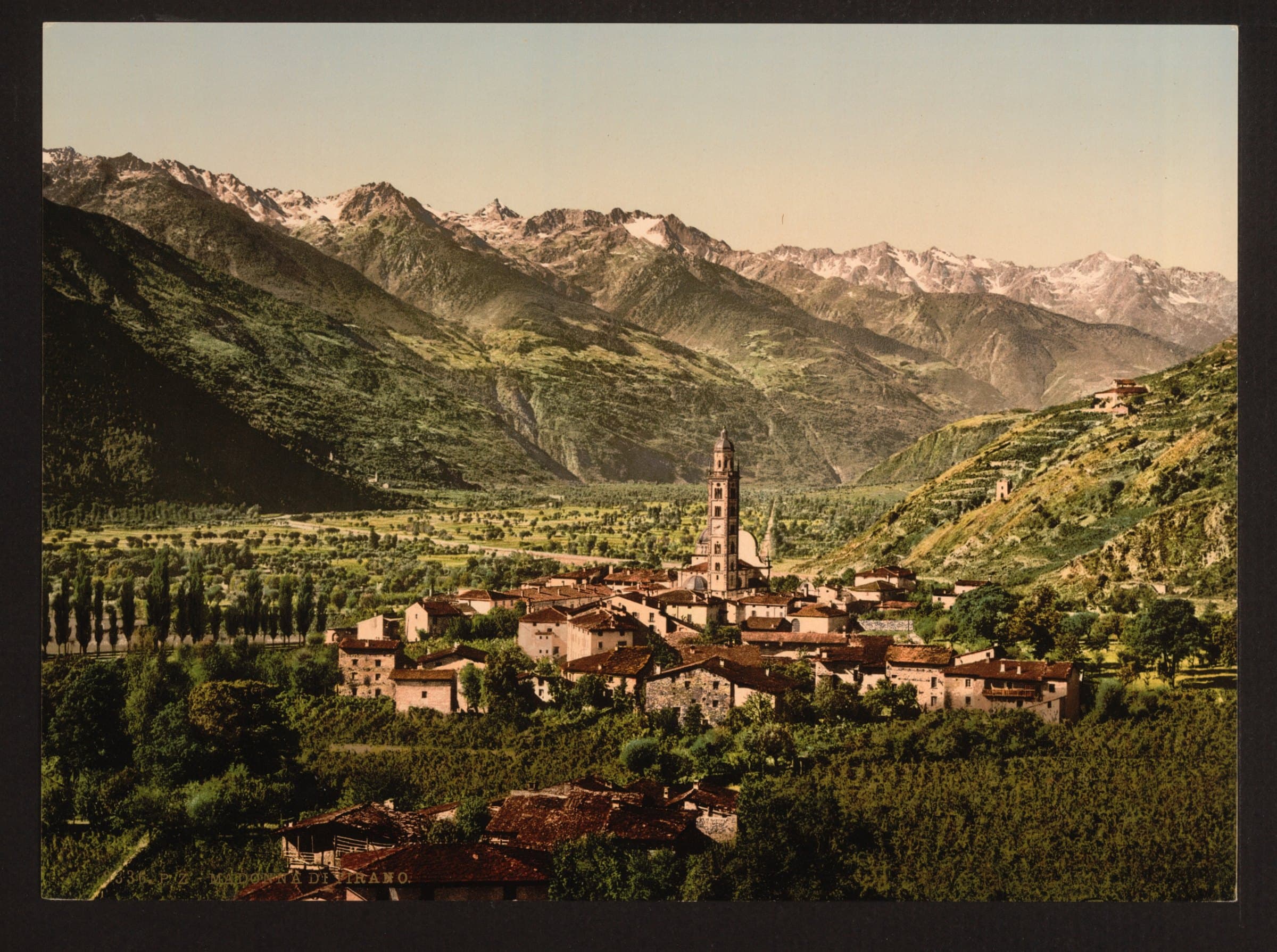
Tirano and its history
From prehistoric engravings to the sanctuary of 1504, from the international fair to the Sacro Macello, from the walls of Ludovico il Moro to the Red Train: the complete history of Tirano, border town of Valtellina.
Read · 56 min read →
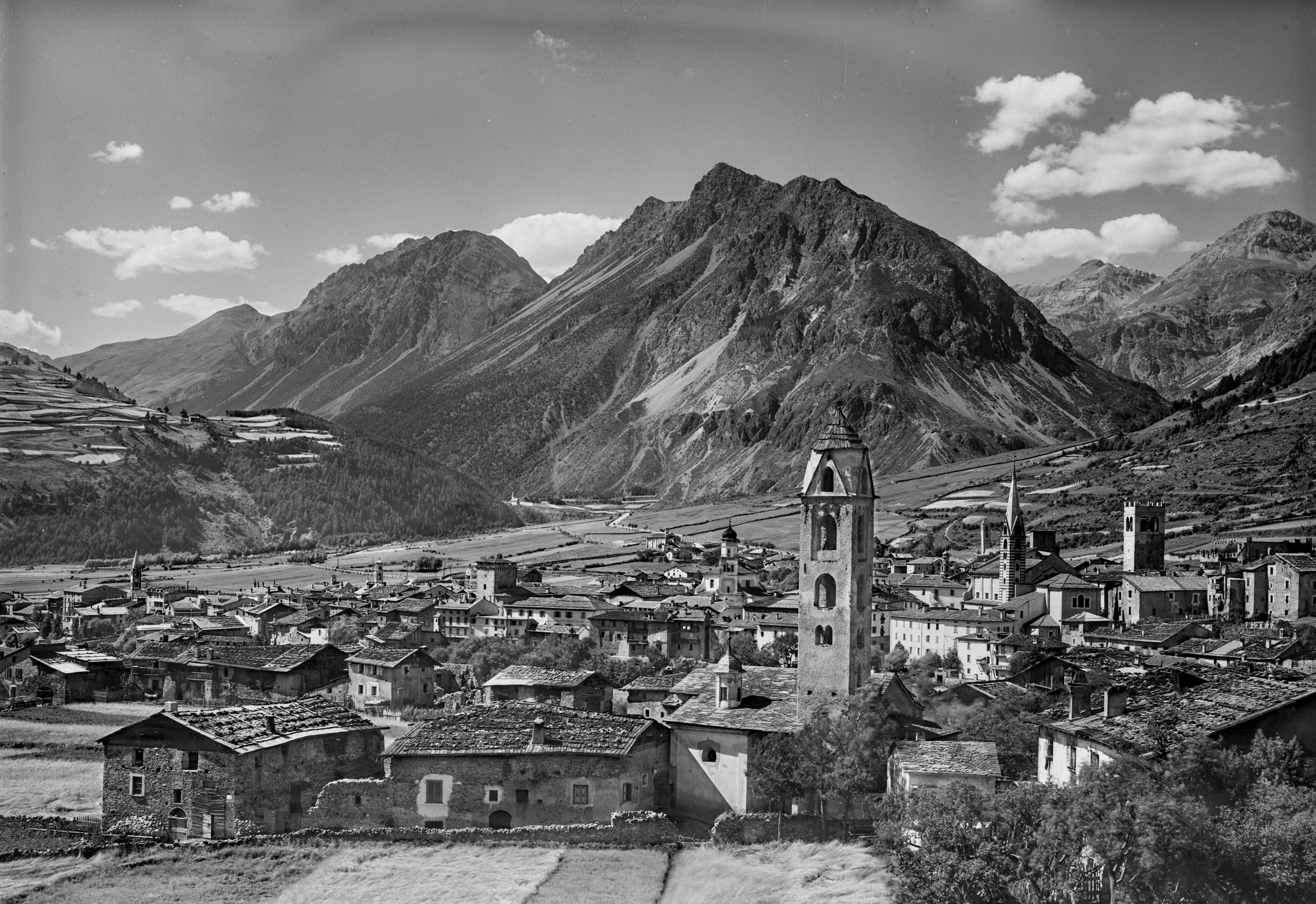
Bormio and its history
From a name meaning "hot spring" to the magna charta of 1377, from the Kuerc to the Stelvio road, from the Carneval di Mat to the World Ski Championships: the story of Bormio, the town that has always defended its autonomy.
Read · 13 min read →
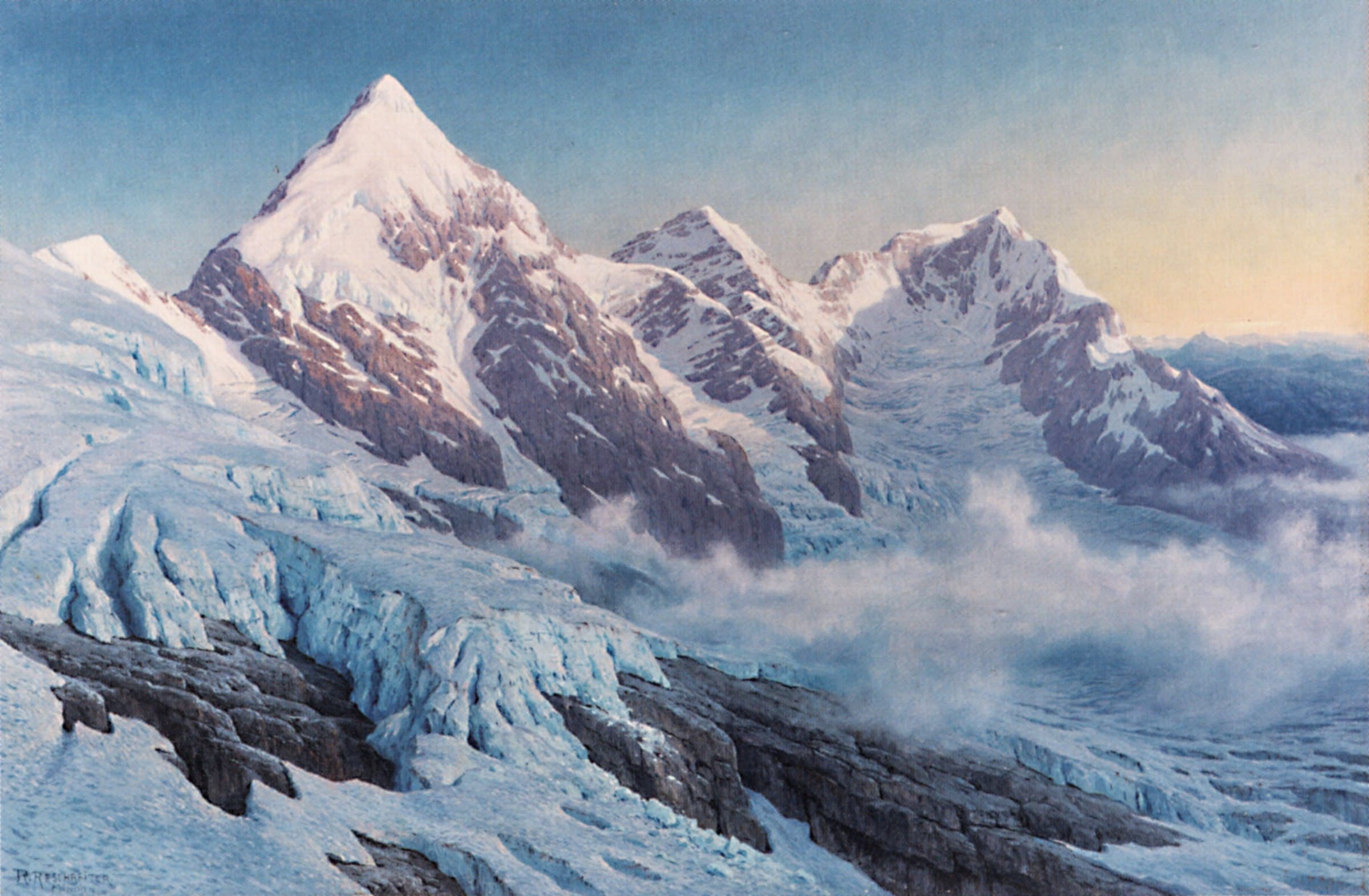
Valtellina in the First World War
The Ortles-Cevedale and Stelvio front between 1915 and 1918: Forte Venini at Oga, the Austrian capture of Scorluzzo, the Guide Ardite of the Val Zebrù, the battle of San Matteo at 3,678 metres and the traces to visit today.
Read · 12 min read →
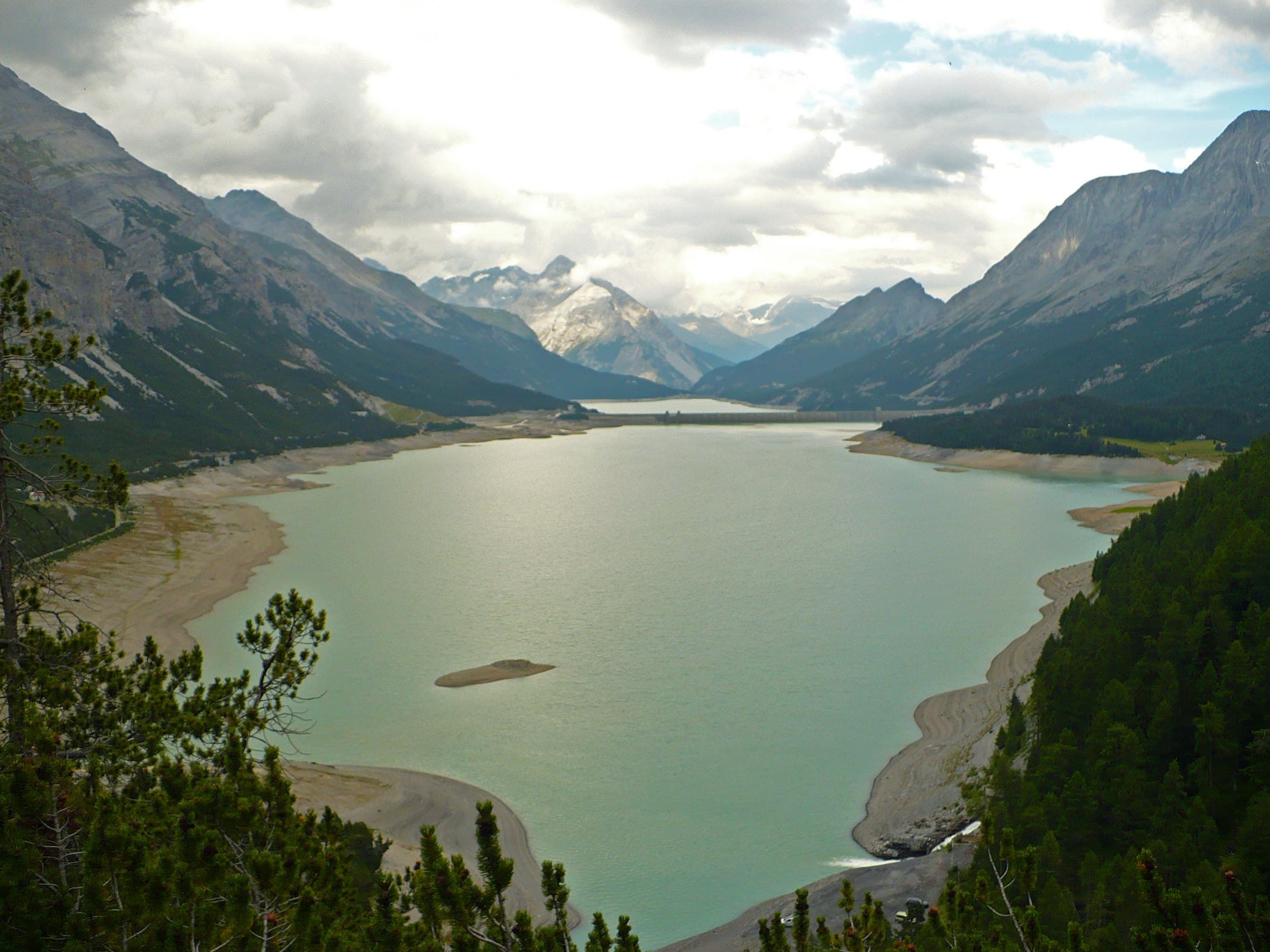
The history of hydroelectric power in Valtellina
From the first three-phase electric train of 1902 to the power stations of Grosotto, Roasco and Premadio, from the Cancano dams to the Adda system: a century of engineering, architecture and artificial lakes that still power Milan.
Read · 12 min read →
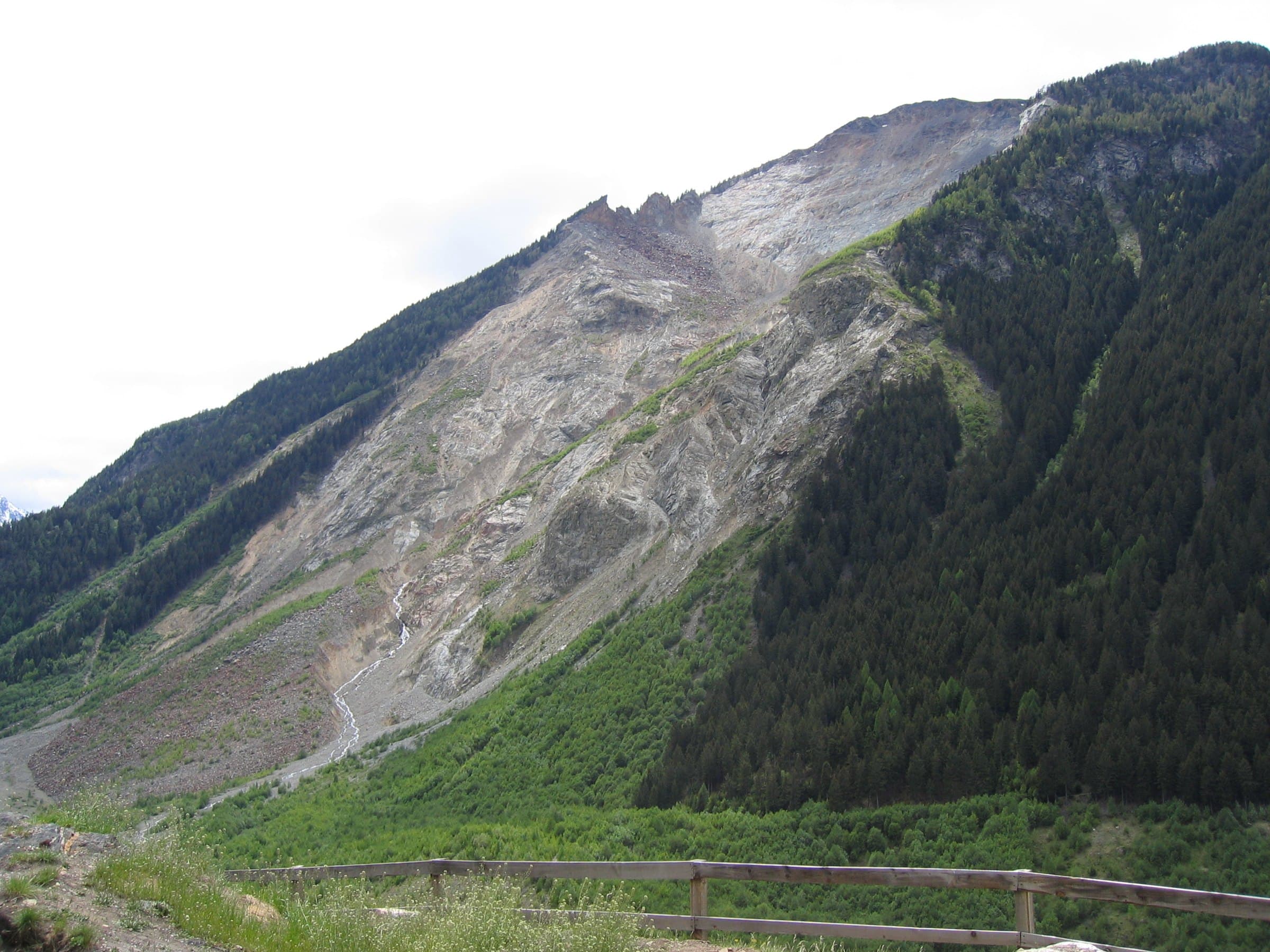
The Val Pola landslide (Monte Coppetto), 1987
On 28 July 1987, at 7:18, the slope of Monte Zandila (also remembered as Pizzo Coppetto) collapsed onto the Val Pola, overwhelming Sant'Antonio Morignone and Aquilone. The story of the emergency, of the lake on the Adda, of the reconstruction and of memory.
Read · 12 min read →